Best Voice Translator App for iPhone: Why 133 Languages Fail
September 7, 2026 · 8 min read

Google Translate boasts 133 languages. Apple just announced live AirPods translation for iOS 26. Sounds impressive until you're standing in a Bangkok market trying to order food and realize neither can handle the five tones that make Thai actually make sense. The numbers look good on paper, but tonal languages like Vietnamese and Thai expose a hard truth: more languages doesn't mean better translation.
Your iPhone's built-in translator probably won't work in Vietnam
Most iPhone users assume Apple Translate will handle their travel needs. The app comes pre-installed, works offline, and integrates with Siri. Sounds travel-ready.
Step 1: Check if your language is even supported for live translation.
Apple's new AirPods translation feature only supports 5 languages. Vietnamese and Thai are not among them. That's a problem when 70 million Vietnamese speakers and 60 million Thai speakers make up a significant portion of Southeast Asian tourism.
Step 2: Check your hardware.
Even if your destination language were supported, the feature requires AirPods Pro 2, AirPods Pro 3, or AirPods 4 with ANC. Most travelers don't own these specific models. And if you're in the EU? The feature isn't available at all.
Step 3: Consider what "supported" actually means.
Here's where language count becomes a vanity metric. Google Translate covers 133 languages. Apple covers fewer. But neither figure tells you whether the app can handle the five tones in Thai or the six tones in Vietnamese that change a word's entire meaning.
Real communication requires tonal accuracy and cultural context, not just word matching.
We tested real translation apps against real scenarios: ordering street food in Hanoi, negotiating a taxi fare in Bangkok, explaining allergies to a vendor who speaks no English. The results reveal which apps actually work when travelers struggle most.
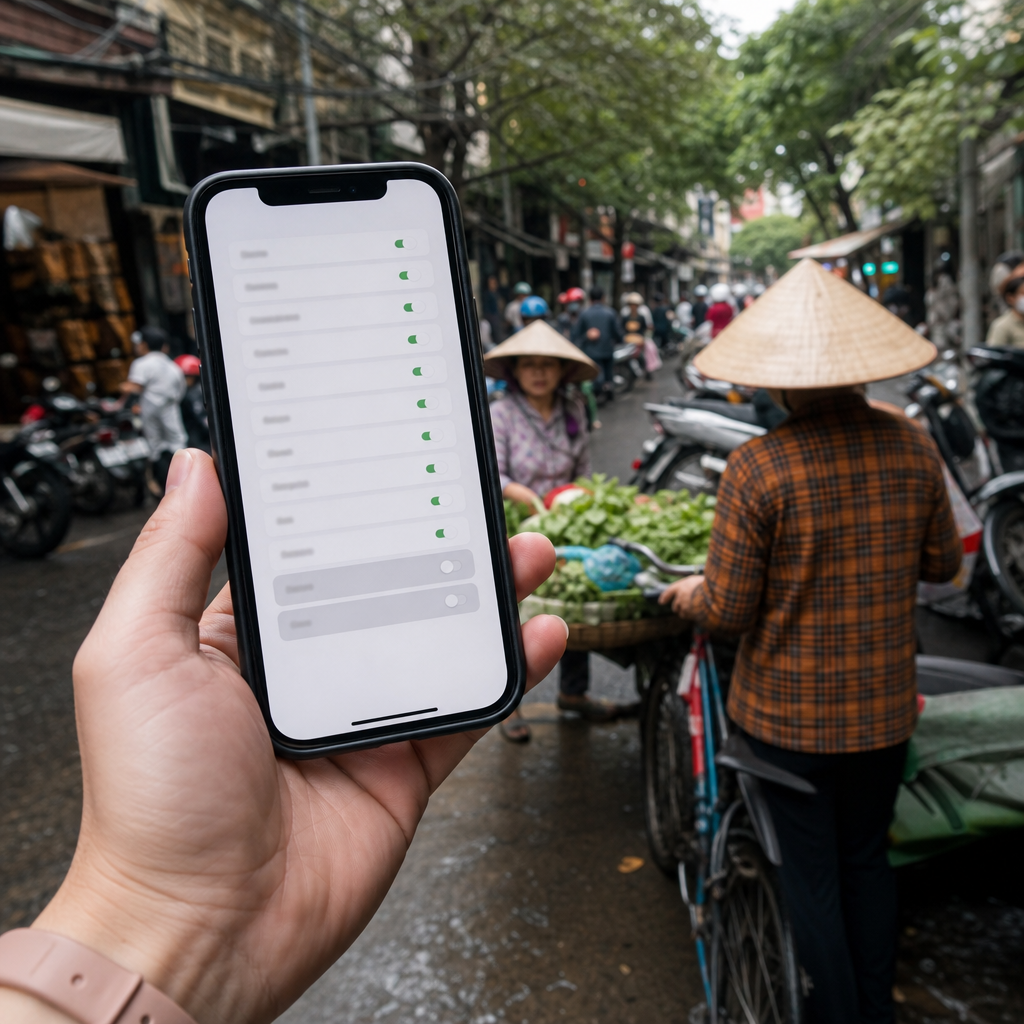
Scenario one: A Bangkok taxi where Google's 133 languages fail
Late evening in Bangkok. The Suvarnabhumi airport taxi queue finally moves, and you slide into the back seat with your luggage. You've got the hotel address ready in Google Translate. 133 languages. Should be fine.
The driver squints at your screen. You tap the speaker icon. The app pronounces something. He shakes his head, pulls into traffic anyway, and starts driving in what might be the right direction. Or might not be.
Here's what happened: Thai has five tones. The same syllable pronounced with a rising tone versus a falling tone becomes an entirely different word. Google translated your words correctly but missed the meaning entirely. The app optimized for vocabulary, not for the tonal precision that makes Thai actually work.
Free apps optimize for language count as a marketing feature, not for the nuanced accuracy that tonal languages require.
Multiple sources confirm this pattern. Google struggles with meaning and context in tonal languages despite being comprehensive and free. Real language is messy, full of idioms and informal phrasing that word-for-word translation simply can't handle. The 133-language number looks impressive in the App Store. It means less when you're circling the wrong neighborhood at midnight.
What travelers actually need is a voice translator app that translates what you mean, not just the words you said. The difference matters when every syllable carries tonal weight.
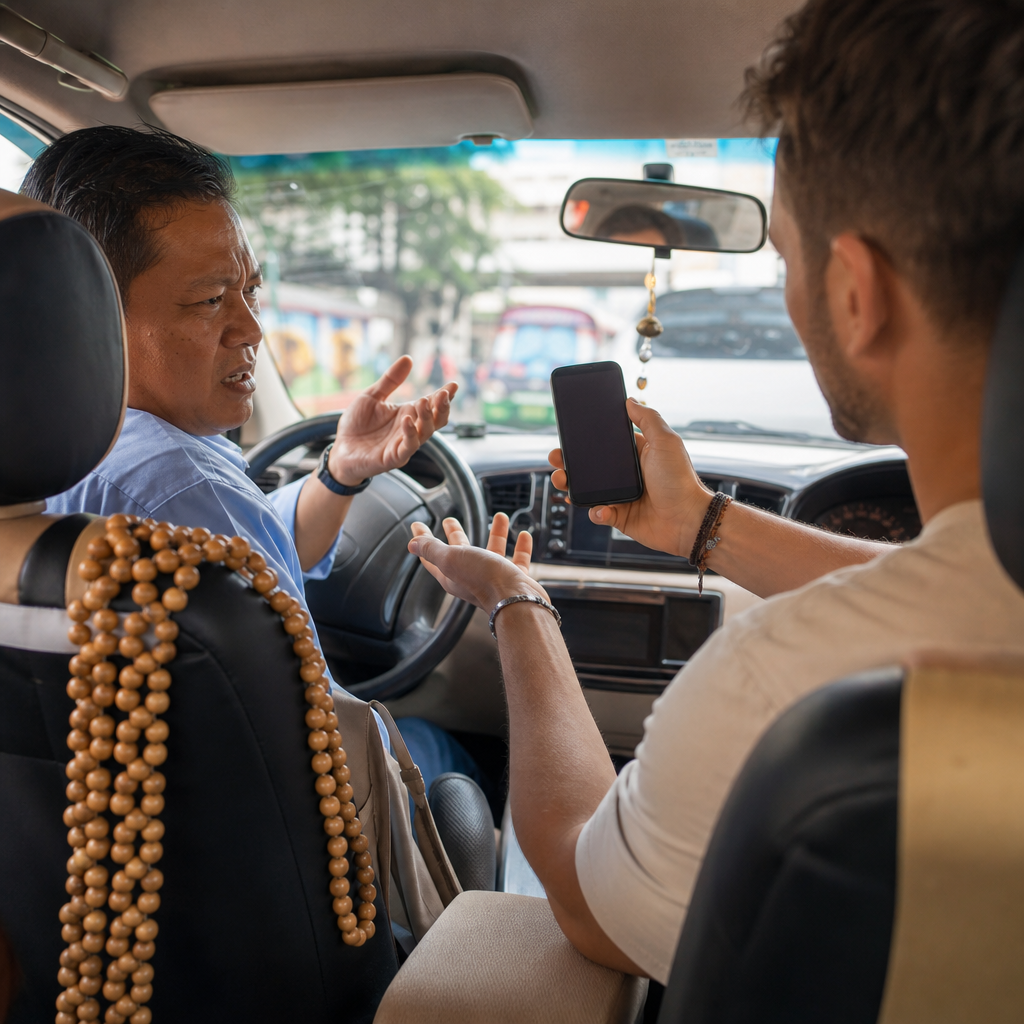
Scenario two: Ordering street food in Hanoi where tone changes everything
The Hanoi Old Quarter at lunchtime. Plastic stools, steaming bowls, and a handwritten menu you can't read. The vendor speaks rapid Vietnamese. You're trying to ask about peanuts because your allergy is serious. Your phone becomes your lifeline.
- Vietnamese has six tones, not five like Thai. The word "ma" means ghost, mother, rice seedling, tomb, horse, or "but" depending on tone. One syllable, six completely different meanings. Free apps rarely capture this precision.
- Real language is messy. Street vendors use slang, skip words, and speak in fragments. Word-for-word translation breaks down when someone says the equivalent of "spicy okay?" instead of "Would you like your dish prepared with chili?"
- Papago consistently outperforms Google for Asian languages. Multiple travel resources recommend it specifically for Vietnamese, citing its strength in tonal accuracy and understanding formality levels.
- VoiceTra, a free app from the Japanese government, covers 38 languages with specific focus on Asian language accuracy. Vietnamese, Thai, Myanmar, Khmer, and Lao are all supported. Built for precision, not marketing numbers.
- Context matters more than vocabulary size. Asking about allergies requires understanding intent, not just matching words. The difference between "no peanuts" as a preference versus a medical necessity changes everything.
The vendor is waiting. Your app needs to capture meaning, not just syllables.
Scenario three: Meeting your Thai partner's parents where formality matters
Ordering the wrong noodles is awkward. Addressing your future mother-in-law with the wrong pronoun is something else entirely.
Cross-cultural couples face this moment eventually. The flight is booked, the family dinner is scheduled, and suddenly the stakes jump from tourist inconvenience to relationship territory. Thai and Vietnamese both encode respect directly into language. Different pronouns for older versus younger relatives. Sentence structures that shift based on the listener's status. Honorifics that signal whether you see someone as an equal, an elder, or a stranger.
Literal translation misses all of this. The words might be correct while the register is completely wrong. Calling your partner's grandmother by a casual pronoun is the linguistic equivalent of showing up in flip-flops.
DeepL Voice gets mentioned as the gold standard for text accuracy. Fair enough. But it covers around 30 languages for voice, skews heavily toward enterprise use cases, and wasn't built for sitting across from your partner's parents trying to express genuine respect. ISO 27001 certification matters less than getting the formality right when someone's mother is deciding whether she approves of you.
What actually helps in these moments is a hands-free translator that captures cultural register, not just vocabulary. The couples who get this right aren't relying on apps with 133 languages. They're using tools designed for face-to-face conversations where tone and respect carry more weight than word count.
What specialized apps get right that comprehensive apps miss
The pricing landscape tells an interesting story. Paid translation apps range from $5.99 per month for iTranslate to $19.99 or even $29.99 per month for premium options like LiveLingo. Hardware solutions like Timekettle demand $249 to $399 upfront. Meanwhile, Papago costs nothing and consistently outperforms Google for the exact languages Southeast Asia travelers actually need.
The reason is straightforward. Papago was built for tonal accuracy across 13 to 15 languages, not global marketing coverage. When comparing the best translation apps for international travel, the pattern becomes clear: specialized tools win where it matters.
The real question is what kind of traveler you are. Do you want an app that works passably in 133 countries, or one that works excellently in the countries you're actually visiting? Most people don't need Icelandic and Swahili and Tagalog on the same trip. They need one or two languages handled properly.
This is where Tolk's approach makes sense. Purpose-built for face-to-face scenarios, the app prioritizes meaning, tone, and cultural context over raw language count. The difference shows up exactly when travelers need it most: standing in front of someone, trying to communicate something that actually matters.
Language count looks good in app store descriptions. Tonal precision gets you fed, gets you home, and gets you through dinner with your partner's parents.
Choosing the right translator for how you actually travel
The pattern across every scenario is consistent. Language count is a marketing metric. Tonal accuracy is what actually gets you through the day.
Free options exist that work remarkably well. Papago handles Vietnamese and Thai with the precision these languages demand. VoiceTra covers 38 languages with specific strength across Southeast Asia. Both cost nothing and outperform Google where it matters most.
The distinction worth understanding is between text translation and face-to-face conversation. Text tools optimize for reading comprehension. Video call translation prioritizes audio latency. But standing in a Bangkok taxi or sitting across from your partner's family requires something different entirely: tone preservation, cultural register, and the kind of contextual understanding that turns syllables into actual meaning.
Tolk was built for exactly these moments. The app captures what you mean, not just what you said, in languages where a single mispronounced tone changes everything. For travelers and cross-cultural couples who need their words to land correctly in person, that difference matters.
The best voice translator app compared isn't always the one with the biggest number on its marketing page. The best one is the tool that handles your specific trip, your specific language, and your specific conversations with precision.
Skip the language count. Check what actually works where you're going.
Try Tolk free and see how tone-aware translation works in Vietnamese, Thai, and other languages where meaning matters more than words.