Vietnamese Translation Apps Fail: How to Be Understood
February 25, 2026 · 8 min read · Published by Tolk
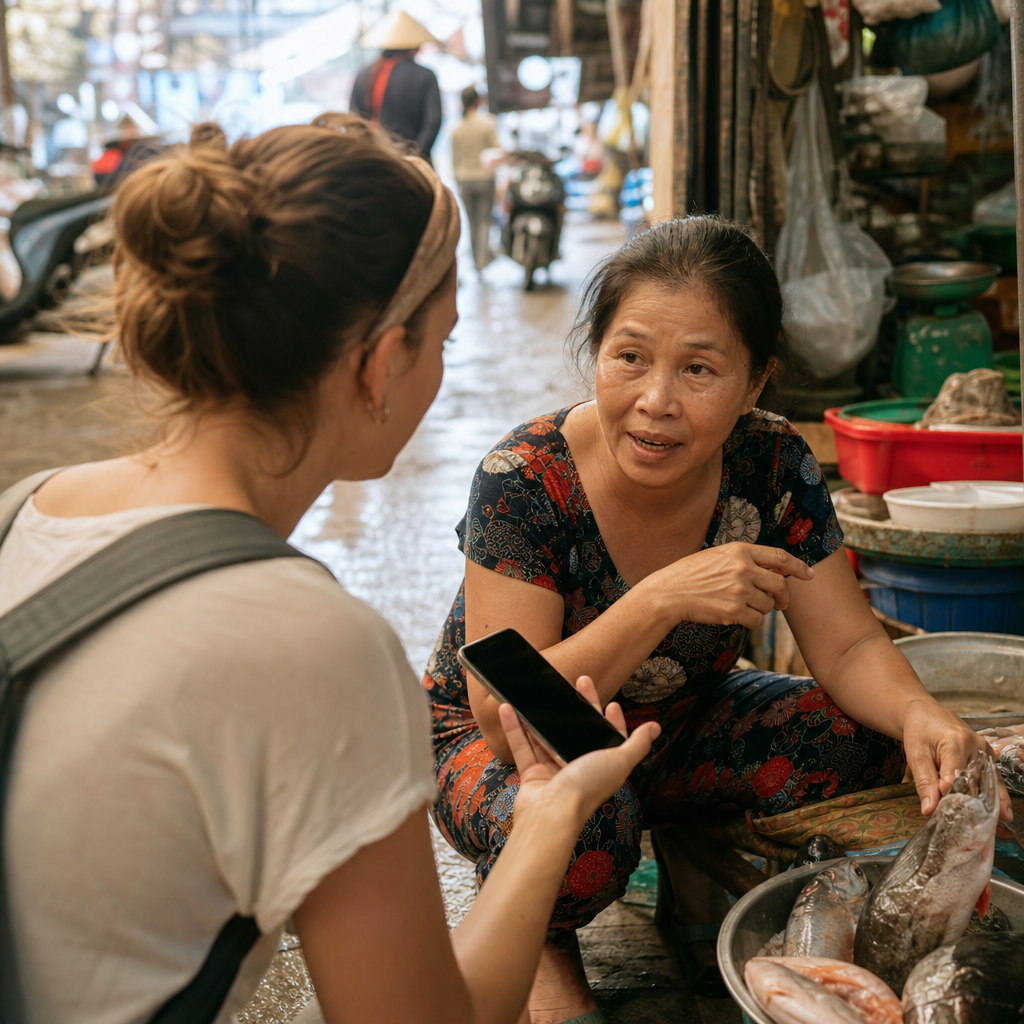
Vietnamese has six tones, and getting even one wrong can turn "rice" into something inappropriate. That's the challenge 95 million speakers navigate daily, and it's exactly where most translation apps fall apart. Apps trained on clean, formal speech struggle with the messy reality of street vendors, regional accents, and rapid-fire conversations. So how do travelers actually communicate when their phone lets them down? Turns out, the workarounds are often more effective than the technology itself.
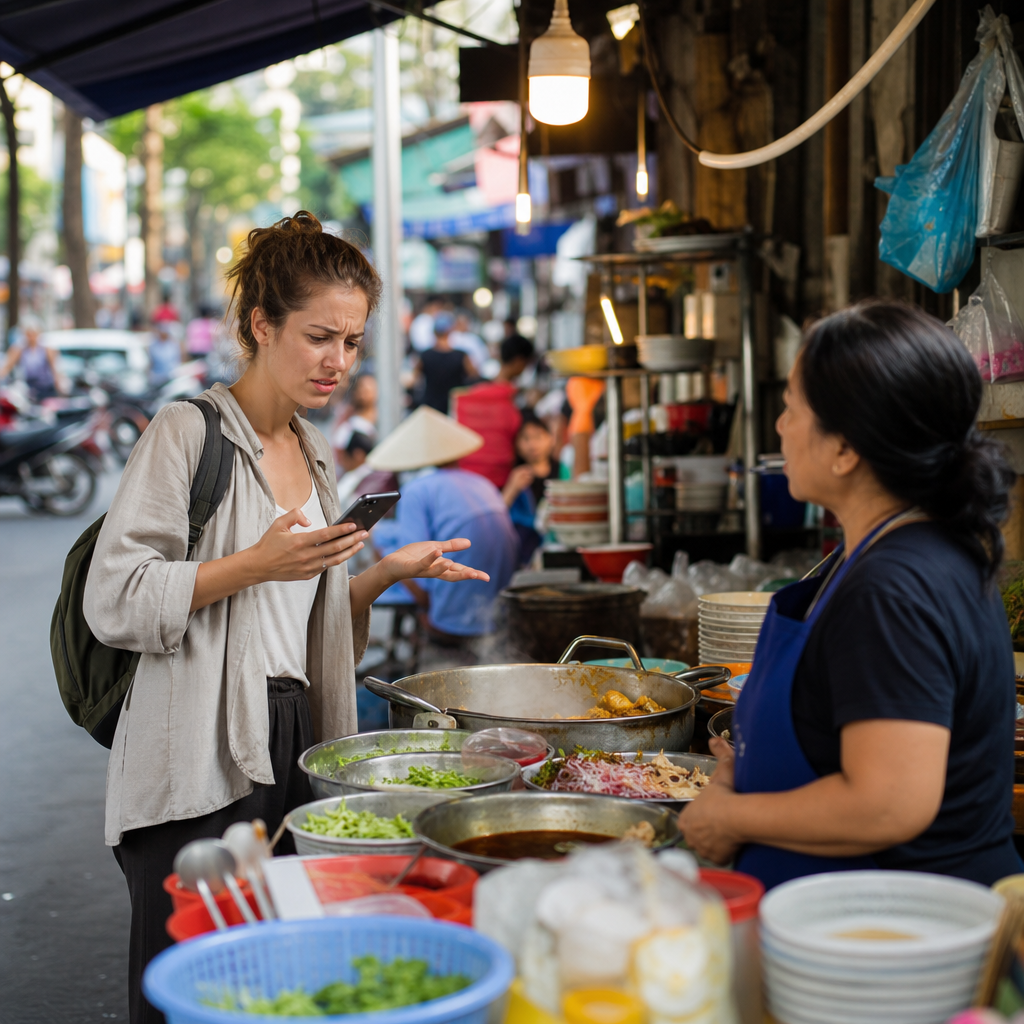
Why your translation app chokes on Vietnamese street conversations
The gap between textbook Vietnamese and what you actually hear at a bánh mì stall is enormous. Most apps simply weren't built for the chaos of real conversations.
- Vietnamese has six tones where the same syllable, "ma," can mean ghost, mother, rice seedling, tomb, horse, or "which" depending on pitch. Getting one wrong doesn't just confuse people. It can cause genuine offense.
- Regional accents shift dramatically from Hanoi to Saigon. A vendor in Ho Chi Minh City sounds nothing like the formal northern dialect most apps learned from.
- Audio modes in popular free translators need constant restarts with tonal languages, according to user reports. Tone recognition adds a layer of complexity that goes beyond simple speech-to-text processing.
- The 3-5 second latency from speech recognition to translation to output kills natural rhythm. A quick market exchange becomes an awkward silence while everyone stares at your phone.
- Apps trained on clean, formal speech consistently fail with rapid, accented Vietnamese. As Vietcetera notes, even well-reviewed translation tools struggle with the real-world speech you encounter in markets and taxis.
The result? Vietnamese travelers quickly learn that apps are unreliable narrators, not conversation partners. The phone becomes a backup, not a lifeline.
The photo library becomes your real phrasebook
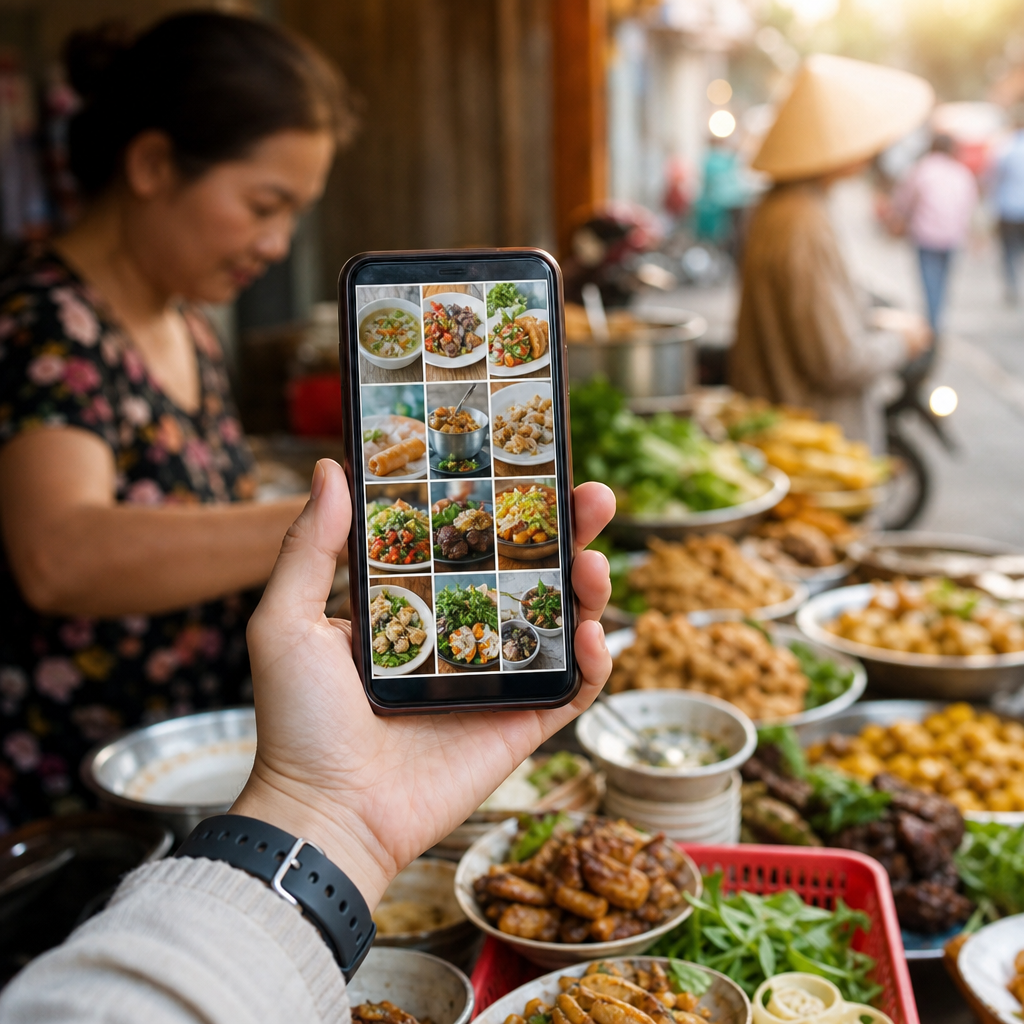
The most effective translation tool in Vietnam isn't an app. It's the camera roll.
- Experienced travelers build curated galleries of food photos, hotel addresses written in Vietnamese, and screenshots of destinations. Pointing to a picture of phở bò communicates instantly what ten app attempts cannot. Photos bypass the tone problem entirely.
- Offline language packs become critical, not for translation but for showing saved phrases and images. Rural areas, basement restaurants, and that one taxi going through a tunnel are exactly where internet fails and communication matters most.
- Smart travelers screenshot successful translations from past trips, building a visual vocabulary that works regardless of whether they're in Hanoi or Ho Chi Minh City. Regional accent? Doesn't matter when the vendor can read the text or recognize the dish.
- The workaround reveals what actually matters in a translation app: offline reliability and easy access to saved content. Real-time accuracy becomes secondary when you can show someone exactly what you need. Common problems with real-time translation like latency and accent recognition disappear when the conversation becomes visual instead of verbal.
The camera roll strategy works because it sidesteps everything that makes Vietnamese difficult for apps. No tones to misinterpret, no accents to confuse the algorithm, no awkward pauses while processing. Just a finger pointing at exactly what you want.
Building your translation team: The taxi driver, the hotel clerk, the cafe owner
When apps fail, people step in. Long-term travelers in Vietnam often build informal translation networks, specific locals who know their accent, their habits, and their communication quirks.
- Even apps marketed as conversation tools fall short. Some apps that list over 100 languages and bill themselves as real-time conversation tools still don't offer a full conversation mode for Vietnamese. They handle speech recognition and text-to-speech, but not the back-and-forth flow that pharmacy visits or tour bookings actually require.
- The taxi driver you call repeatedly becomes more valuable than any subscription. They already know where you live, which coffee shop you prefer, and how you pronounce "bệnh viện" with your particular accent. That context takes weeks to build and no app stores it.
- Hotel front desk staff often become emergency translation services by default. Medical issues, police reports, complicated visa questions: these situations need someone who can read body language, ask clarifying questions, and advocate on your behalf. Apps cannot do that.
- Café owners in expat neighborhoods see the same faces daily. They learn preferences, remember allergies, and eventually become the person you call when you need help explaining something complicated to a landlord or doctor.
This explains why experienced travelers invest in relationships over app subscriptions. A human translator who knows you is worth more than perfect speech recognition that does not.
The three phrases that actually work and why travelers memorize them
Experienced travelers in Vietnam figure out something useful within the first week. Certain phrases translate correctly every time, while others consistently fail. So they memorize the winners and stop fighting the losers.
The pattern is predictable. Translation apps require plain speech because idioms and humor translate literally. Saying "no problem" often creates confusion, the literal Vietnamese coming out awkward or ambiguous. But "okay" works everywhere. Same with numbers, addresses, and simple confirmations. Travelers learn which phrases survive the translation process intact and which ones get mangled beyond recognition.
Simple greetings matter more than complex sentences. "Xin chào" and "cảm ơn" build trust and signal respect in ways that showing an app screen never can. A vendor who hears you attempt Vietnamese, even badly, responds differently than one watching you tap and swipe. The effort itself communicates something.
This explains why travelers discover that speaking phrases themselves creates warmth that app playback cannot replicate. A robotic voice playing from a phone speaker feels transactional. A stumbling but genuine attempt at the local language feels human. The difference shows in how people treat you afterward.
The strategy shifts from "translate everything" to something more practical. Learn the openers, gesture the rest, and reserve apps for numbers and addresses. For anything requiring nuance, translation that captures meaning and tone matters far more than word-for-word accuracy. The travelers who figure this out stop fighting their phones and start connecting with people.
What this means for choosing the right translation app
The pattern is clear: apps that work well for Spanish or French often struggle with Vietnamese specifically. Regional dialects and rare language pairs significantly reduce accuracy, which means travelers should test any app on actual Vietnamese conversations before trusting it in a Hanoi pharmacy or Saigon taxi.
- The winning features have nothing to do with accuracy percentages on marketing pages. Offline reliability, easy phrase saving, and slow audio playback for learning key phrases matter far more in practice. An app that works in a basement noodle shop beats one with 98% accuracy that needs constant internet.
- Apps that let you save phrases from real conversations with locals become more valuable over time. That sentence the hotel clerk helped you craft? Save it. The way your taxi driver corrected your pronunciation? Record it. These personal libraries outperform generic dictionaries within weeks.
- The 3-5 second latency in most apps makes them poor conversation partners but excellent preparation tools. Pre-translate pharmacy requests, restaurant questions, and emergency phrases before you need them. Live translation is the backup, not the primary strategy.
- Tolk and similar tools that prioritize meaning and tone over literal words fit better into a human connection strategy. The goal is supporting conversations, not replacing them.
The best translation app is ultimately the one that helps you build relationships with the people around you. Technology that fades into the background while human connection moves forward.
The real Vietnamese translation strategy: People first, apps second
The travelers who communicate best in Vietnam share a common approach. They build systems around people, not apps. Curated photo libraries for pointing at food. A taxi driver who knows their accent. A hotel clerk who handles the complicated stuff. A handful of memorized phrases that signal respect before any translation happens. The app sits in the pocket, ready when needed but never leading the conversation.
Technology is improving. But Vietnamese remains uniquely difficult for current tools. Six tones, dramatic regional variation, and the gap between textbook speech and street reality create problems that better algorithms alone cannot solve. The apps will get better. They already have. But the fundamental challenge of tonal languages combined with real-world accents means human support stays essential for years to come.
This hierarchy changes how smart travelers prepare. Time spent building relationships with locals pays off more than hours comparing app reviews. Practicing a few key phrases creates more goodwill than perfect speech recognition ever could. The phone becomes a supporting actor, not the star.
The best communicators in Vietnam are not running the most expensive translation software. They are the ones who figured out that imperfect tools work fine when wrapped in human systems that fill the gaps.
Ready for a translation app that captures meaning and tone instead of failing on every sixth syllable? Try Tolk and see how AI that understands context can finally support your Vietnamese conversations instead of sabotaging them.
Tolk is a Voicelabs app for face-to-face conversations. Read how Tolk works for the conversation flow, supported devices and getting started, or see what changes in Tagalog, Spanish, French, Portuguese, Japanese, Korean, Mandarin, Arabic, Thai, Vietnamese, Slovak.

Try real-time voice translation.
Start with 30 free minutes on iPhone or Android.